
Safety Files South Africa | Requirements, Templates & Guides
Construction Safety File South Africa
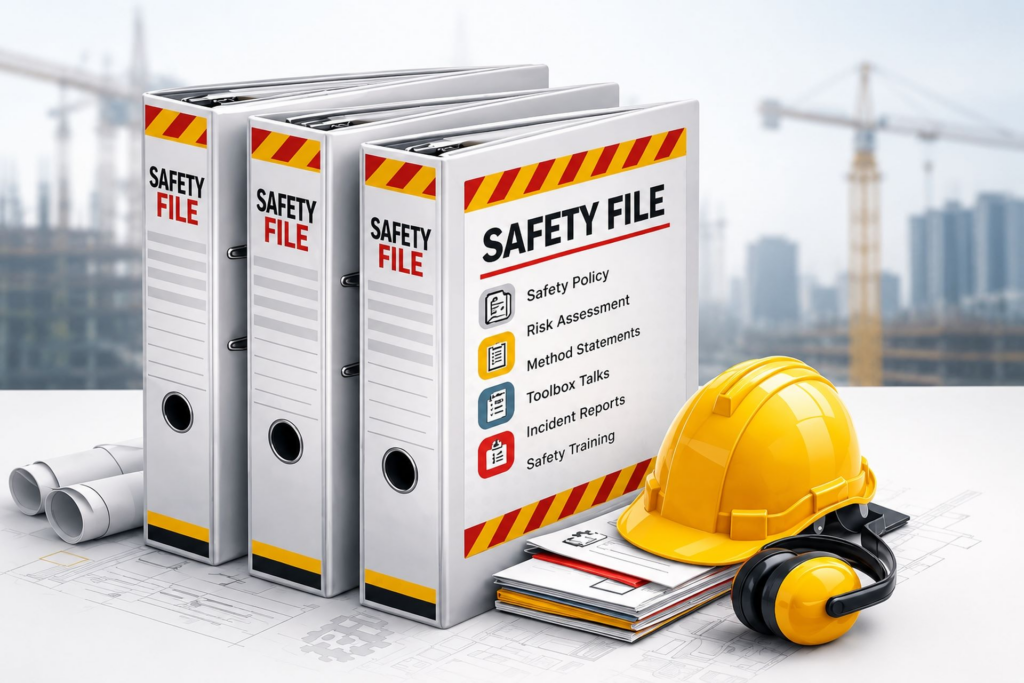
Construction Safety File South Africa
A construction Safety File is the controlled record of the health and safety information required for a specific construction project and contractor scope. It must support the safe execution of the work and provide evidence that the contractor’s legal and project duties are being implemented.
The file is not a substitute for site management. The appointments, plans, risk controls, inspections, training and emergency arrangements described in the file must exist and operate in practice.
Principal contractor and contractor responsibilities
The principal contractor must develop and apply a site-specific health and safety plan based on the client’s specification, open and keep a health and safety file, manage contractor appointment and coordination duties, conduct periodic audits and hand a consolidated file to the client at completion.
Each appointed contractor must provide a suitable health and safety plan based on the relevant sections of the client specification supplied through the principal contractor, open and keep its own health and safety file, cooperate with the principal contractor and provide information that may affect health and safety or justify a plan review.
Before construction work begins
- Confirm whether a Construction Work Permit or notification of construction work applies.
- Obtain the client’s health and safety specification and relevant baseline risk assessment information.
- Confirm the formal appointment and exact scope of work.
- Prepare the health and safety plan and submit it through the required approval process.
- Open the Safety File and allocate document responsibilities.
- Complete project-specific risk assessments and work methods.
- Appoint competent persons and obtain signed acceptance and supporting evidence.
- Verify medical fitness, training, induction and authorisation.
- Inspect plant, tools, equipment, access systems and PPE before use.
- Brief the workforce on hazards, controls, emergency arrangements and reporting requirements.
During the project
- Keep the file on site and available for authorised inspection.
- Complete registers and inspections at the required frequency.
- Review risk assessments when design or construction changes affect the risk profile and after incidents.
- Update appointments when personnel or responsibilities change.
- Monitor expiry dates for medicals, training, compensation and insurance records.
- Record toolbox talks, inductions, consultations, audits, corrective actions and close-out evidence.
- Stop unsafe work and correct deviations from the approved health and safety arrangements.
- Keep contractor lists, agreements and scopes current where subcontractors are appointed.
At project completion
The principal contractor must compile and hand over the consolidated health and safety file required by Construction Regulation 7(1)(e). Contractors should close their own files, resolve outstanding findings and provide the agreed records required for consolidation and handover.
When a template is not enough
A template is useful only when it is correctly selected and thoroughly customised. Professional assistance is advisable when the work includes multiple contractors, work at height, temporary works, lifting operations, excavation, demolition, hazardous substances, complex plant, client-specific document control or a Construction Work Permit process.
Safety File (Pty) Ltd compiles project- and scope-specific construction Safety Files and can provide audits, site inspections and monthly maintenance under a defined service scope.